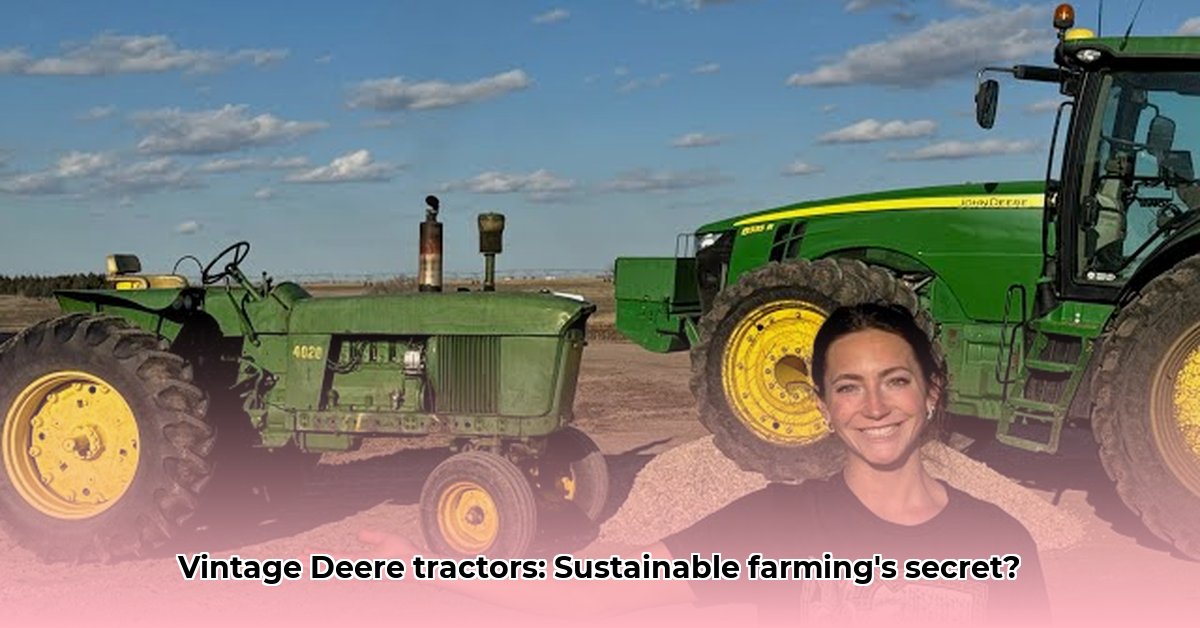
John Deere Tractor Old: A Legacy of Innovation and Sustainable Farming
The rumble of an old John Deere tractor signifies more than just machinery; it’s a testament to agricultural evolution and a journey toward sustainable farming practices. From the simple horse-drawn plows to the sophisticated technology of today, John Deere's legacy is deeply intertwined with increased efficiency and productivity in agriculture. This narrative explores the historical development of these iconic tractors, showcasing key innovations and their impact—both positive and negative—on environmental sustainability. For more detailed model information, see this helpful resource on old John Deere models.
The iconic Model D, a workhorse of its era, redefined farming by significantly increasing cultivatable land and boosting food production. However, this efficiency came at a cost. Did this increased productivity outweigh the environmental impact of its relatively high fuel consumption? This question underscores the complexities inherent in technological advancement and its effect on the environment. The subsequent Model A, a revolutionary row-crop tractor, introduced precision planting, minimizing waste and maximizing yields. This foreshadowed modern GPS-guided technology, demonstrating a remarkable trajectory of innovation.
The introduction of diesel engines in models like the R series marked another pivotal moment. Diesel provided superior power and fuel economy compared to gasoline, directly influencing both farm productivity and the overall cost of operation. This represents a key step toward sustainability. Fuel efficiency improvements, however, were not the only concern. Early John Deere tractors, despite their groundbreaking designs, had considerable environmental consequences. Gasoline-powered models were particularly fuel-intensive, while even diesel engines produced emissions. The heavy machinery itself contributed to soil compaction, harming long-term soil health and productivity. How did John Deere reconcile progress with environmental responsibility?
The answer lies in continuous innovation and evolving farming techniques. The transformation from rudimentary machines to today’s high-tech tractors exemplifies this commitment. Modern John Deere tractors incorporate technology designed to minimize their environmental footprint. Precision agriculture, guided by GPS, dramatically reduces the need for chemicals and water, significantly advancing sustainability. However, equitable access to these advancements remains a challenge, with smaller farms often unable to afford this cutting-edge technology, creating an imbalance within the farming community. This disparity highlights the need for policies that ensure sustainable practices are accessible to all farmers.
Focus on Key Models and their Environmental Impact
Let's examine the environmental impact of specific older John Deere models:
| Model | Key Features | Impact on Sustainability |
|---|---|---|
| Model D | Rugged, Powerful | Increased efficiency, but higher fuel use and emissions than later models. |
| Model A | Row-crop design | More precise planting, less waste of seeds and resources. |
| Model R | Diesel Engine | Better fuel efficiency than gasoline models, but still produced emissions. |
| Modern Models | Precision Tech | Optimized resource use (water, fertilizer), reduced emissions, but higher initial cost. |
This table showcases the evolution of John Deere's commitment to sustainability, revealing a clear progression from higher fuel consumption and emissions to the more resource-efficient models of today.
Modern Innovations and Future Challenges
The journey of the old John Deere tractor is not merely a historical account; it's a testament to continuous improvement in agricultural technology. It highlights both remarkable advancements and the persistent challenges facing sustainable farming. From simple machines to precision agricultural tools, the progress is undeniable. What lies ahead? The ongoing pursuit of even lower environmental impact. Alternative fuels, improved recycling, and responsible manufacturing processes are crucial for establishing truly sustainable agricultural practices. A collaborative effort involving farmers, manufacturers, and governments is essential. Only through collective action can we secure a sustainable future for agriculture. The legacy of those old John Deere tractors serves as a powerful reminder of our ongoing journey towards a more responsible and sustainable future.
How to Compare John Deere Tractor Fuel Efficiency Across Different Models
Key Takeaways:
- Diesel engines generally offer superior fuel efficiency compared to gasoline engines, though the magnitude of this advantage depends on usage patterns.
- For users with low annual fuel consumption (e.g., residential users), the higher initial cost of a diesel John Deere tractor may not be justified by fuel savings alone. A comprehensive cost-benefit analysis is recommended.
- High-usage applications, such as commercial landscaping or large-scale farming operations, often make diesel tractors a more economically viable choice in the long term.
- When comparing John Deere models, consider factors beyond fuel efficiency, including power, features, and maintenance costs. This is crucial for a holistic evaluation of a tractor's value.
- A thorough cost-benefit analysis should always precede any tractor purchase decision to ensure it aligns with the buyer's specific needs and usage patterns.
A Practical Guide to Comparing Fuel Efficiency
Comparing John Deere tractor fuel efficiency requires a comprehensive approach: 1. Define your needs: What are the intended tasks? What’s the estimated annual usage? 2. Research models: Explore gasoline and diesel options, examining engine specifications and power ratings. 3. Analyze operating costs: Consider fuel, maintenance, repairs, and depreciation. 4. Consult experts: Dealers can offer valuable insights based on real-world experience.
This structured approach ensures a well-informed decision based on individual requirements and operational context.